Candidate Directors for the 2026 Elections
Below you find a detailed description of each of the 11 candidates, in the order their nominations were submitted. You can find even more information about them on their personal websites. This year 4 new Directors for 2027-2029 will be elected.
 |
Eirini Mavritsaki
Faculty Member/For-Profit Employee
Birmingham City University
Birmingham, United Kingdom |
I am a Professor in Cognitive Psychology at Birmingham City University, with training in mathematics, psychology and computational neuroscience. For over 20 years, I have used biologically plausible computational models, machine learning, and experimental methods to study, attention, neurological and developmental conditions. I also foster supportive environment and inclusive research cultures through mentoring, collaboration and equitable opportunities.
|
| |
Research Interests:
My research interests lie at the intersection of cognitive psychology, computational neuroscience and neuropsychology. I use computational models, alongside machine learning techniques to explain how neural processes give rise to cognition and behaviour. A central focus is visual attention, decision-making and neurological conditions.
Past Experience:
Describe your past contributions or participation in computational neuroscience.
With over 20 years’ experience in computational neuroscience and degrees in Mathematics and Psychology, I have developed biologically plausible spiking neuron models linking neural activity to cognition. My work integrates behavioural, fMRI, EEG and clinical evidence to study attention , ADHD, Alzeimer’s and visual neglect.
Motivation:
Please explain why you want to become an OCNS director.
Since my PhD, the OCNS has supported my growth as a computational neuroscientist, motivating me to give back. I have already contributed to OCNS as Social Media and EDI chair, I promoted engagement, visibility, equity and inclusion, and developed an OCNS mentoring scheme to support members’ professional development. My candidacy reflects my commitment to an open, diverse and collaborative community where researchers at every career stage can connect and thrive.
OCNS and CNS participation:
# of CNS meetings attended: more than 5
Review service for CNS meeting: more than 5
Programme Committee / Local Organizing Committee member: never
Member of OCNS Board of Directors: present
|
 |
Evie Malaia
Faculty Member/For-Profit Employee
University Of Alabama
Tuscaloosa, United States |
I am a tenured Associate Professor of Speech, Language, and Hearing Sciences at the University of Alabama. My lab combines experimental work (EEG, motion capture, radar, and sEMG) with computational modeling to study how brains predict and transfer information in multimodal communication. I have 80+ peer-reviewed publications (h-index 28), NSF and Fulbright funding, and held Marie Curie/EURIAS and NIAS fellowships in Germany and the Netherlands.
|
| |
Research Interests:
Neural mechanisms of prediction in language; information transfer across timescales in brain and behavior (Multiscale Information Transfer framework, linked to active inference/free energy principle); dynamical systems models of communication, with sign language as a high-dimensional visual-motor test case.
Past Experience:
Describe your past contributions or participation in computational neuroscience.
Fellow, Psychonomic Society; Fulbright Specialist (2024-27); Google Summer of Code mentor (2025, 2026); PNAS and Nature Communications reviewer; invited plenary, HSP 2027; talk, IWAI 2026; 1st place, ICCV 2025 sign recognition challenge.
Motivation:
Please explain why you want to become an OCNS director.
I want to help include multiple computational perspectives in OCNS work, to develop computational models applicable across scales, species, and clinical applications. For Sponsorship, I bring links to applied AI and assistive-technology partners. For the Newsletter, I write across disciplines, and can tap into language and active-inference communities. OCNS benefits from a bridge to communities whose data and questions fit (and can help test) computational neuroscience models and methods.
OCNS and CNS participation:
# of CNS meetings attended: 1
Review service for CNS meeting: 1
Programme Committee / Local Organizing Committee member: past
Member of OCNS Board of Directors: never
|
 |
Zhe Chen
Faculty Member/For-Profit Employee
New York University
New York, United States |
I am a Professor of Neuroscience and Psychiatry at NYU Grossman School of Medicine, with affiliated appointment at the Department of Biomedical Engineering. I am the Director of the Computational Neuroscience, Neuroengineering and Neuropsychiatry Laboratory, and Director of the Computational Psychiatry program. An author of over 180 articles and five books, I served in the editorial board for Neural Networks, J. Neural Eng., Front. Comput. Neurosci., Comm. Biol. and IEEE Trans NSRE.
|
| |
Research Interests:
My research interests include but are not limited to neural engineering, brain-machine interfaces, computational neuroscience, computational psychiatry, computational statistics, NeuroAI, clinical AI, and multi-agent systems.
Past Experience:
Describe your past contributions or participation in computational neuroscience.
I have served as the co-Chair and program committee members for many conferences. I am the chair of IEEE EMBS at the New York Chapter. I have been active in computational neuroscience, neurostatistics, and NeuroAI research community (Cosyne, SAND).
Motivation:
Please explain why you want to become an OCNS director.
I like to be become a member of OCNS board of director and contribute to the growth of the research community. I personally felt that there is lots of growth space and potential to engage with the community in the new era of NeuroAI. Bringing academics and industry together is important for making translational impacts on the future. I look forward to future opportunities to work closely with all board members.
OCNS and CNS participation:
# of CNS meetings attended: 2-3
Review service for CNS meeting: none
Programme Committee / Local Organizing Committee member: never
Member of OCNS Board of Directors: never
|
 |
Sharmila Venugopal
Faculty Member/For-Profit Employee
California State University Long Beach
Long Beach, United States |
I am a tenure-track Assistant Professor of Chemistry and Biochemistry at California State University, Long Beach, where I direct my research Lab. Trained in electrical engineering and computational neuroscience, I hold a Ph.D. in Neuroscience from The Ohio State University. My work combines mechanistic modeling with experimental neuroscience to study neurodegeneration.
|
| |
Research Interests:
Research in my lab focuses on developing novel computational framework and experimental tools to unravel neuroglia signaling in the brain. We integrate dynamical systems and network neuroscience methods, real-time molecular imaging, open and closed-loop electrophysiology as key methods in preclinical disease models.
Past Experience:
Describe your past contributions or participation in computational neuroscience.
After earning my Ph.D. in Neuroscience at Ohio State, I held research appointments at Arizona State, the University of Arizona, and UCLA, followed by faculty appointments at UCLA and CSULB. I led an NIH/NINDS R21 on ALS circuit vulnerability and have published on computational neuroscience, neurophysiology, and neurodegeneration.
Motivation:
Please explain why you want to become an OCNS director.
I want to serve on the OCNS Board as Deputy Sponsorship Chair because OCNS has helped shape my scientific community and career. As a former Education and Training Chair and Executive Committee member, I have seen how meetings, student support, and community partnerships advance computational neuroscience. As the Deputy Sponsorship Chair, I would help strengthen sustained sponsorship support for inclusive, high-quality OCNS activities.
OCNS and CNS participation:
# of CNS meetings attended: 4-5
Review service for CNS meeting: 4-5
Programme Committee / Local Organizing Committee member: never
Member of OCNS Board of Directors: past
|
 |
Axel Hutt
Faculty Member/For-Profit Employee
Inria Center, NECTARINE team, iCube, University of Strasbourg
Sulzbach, France |
I am Director of Research at Inria in France and head of the team NECTARINE. For over 20 years, I have been working in computational neuroscience including data analysis and mathematical modeling. Recent work focusses on modeling of endogenous activity and its role in neural processing, being in general anaesthesia or cognitive disorders.
|
| |
Research Interests:
My team and I work on neuromdodulation in theory and experiments with a strong focus on attention deficits. I combine mathematical analysis of stochastic delayed differential equations and random networks with analysis of EEG data obtained from own cognitive experiments.
Past Experience:
Describe your past contributions or participation in computational neuroscience.
Over the last 25 years, I have attended the CNS regularly. I was Member of the Board of Directors about 10 years ago and Member of the Program committee 2022-2024. I have been frequent reviewer of poster abstracts.
Motivation:
Please explain why you want to become an OCNS director.
The CNS is a very important conference in the field supporting especially the junior community and so I would like to contribute to its future success. For many years, I work with Master and PhD students and know that personal scientific exchange is essential in our interdisciplinary research field, and the CNS is a very good platform for this.
OCNS and CNS participation:
# of CNS meetings attended: more than 5
Review service for CNS meeting: more than 5
Programme Committee / Local Organizing Committee member: past
Member of OCNS Board of Directors: past
|
 |
Masoud Kargar
Student Member
University Of Göttingen
Göttingen, Germany |
I am Masoud Kargar, a neuroscience researcher trained in physics, with doctoral research at the University of Göttingen on visual cortical plasticity and binocular integration. I bring experience in interdisciplinary project coordination, biomedical startup development and communication with scientists, clinicians, engineers and industry contacts.
|
| |
Research Interests:
My research interests include synaptic and cortical plasticity, AMPA and NMDA receptor kinetics, binocular integration, and neuronal network dynamics. My work spans PSD-95-dependent visual cortical plasticity and synchronization in Terman–Wang neuronal networks.
Past Experience:
Describe your past contributions or participation in computational neuroscience.
My master's research investigated synchronization in Terman–Wang neuronal networks. My doctoral work combined electrophysiology and quantitative analysis of visual cortical plasticity. I also founded a biomedical startup, coordinating collaborators and helping secure early-stage funding.
Motivation:
Please explain why you want to become an OCNS director.
I would like to help OCNS build lasting sponsor relationships and connect computational neuroscience with industry. My experience includes biomedical startup coordination, securing early-stage support, industry outreach, and organising workshops and events with external partners. As Deputy Sponsorship Chair, I would learn from the current Chair and contribute to sponsor engagement, follow-up and clear sponsorship materials.
OCNS and CNS participation:
# of CNS meetings attended: 0
Review service for CNS meeting: none
Programme Committee / Local Organizing Committee member: never
Member of OCNS Board of Directors: never
|
 |
Jitender Kumar
Postdoc Member/Non-Profit Employee
University Of Calgary
Calgary, Canada |
I am a Postdoctoral Associate in computational neuroscience at the University of Calgary, where I investigate biophysical models of neural excitability and neuromodulation. I have completed my Ph.D. with focus on theoretical modeling, I am passionate about scientific communication, mentoring early-career researchers, and fostering active dialogue across our international, multidisciplinary computational community.
|
| |
Research Interests:
My research focuses on biophysical modeling, cable theory, and finite element methods to investigate axonal refractory dynamics, ionic excitability, and targeted neural stimulation. I combine multi-scale computational tools to bridge single-neuron dynamics with clinical neuromodulation strategies.
Past Experience:
Describe your past contributions or participation in computational neuroscience.
Presented my biophysical modeling research on peripheral nerve dynamics at CNS*2026 in Halifax. Active contributor to computational neuroscience through developing open simulation workflows, peer mentoring, and participating in international forums, technical workshops, and trainee development initiatives.
Motivation:
Please explain why you want to become an OCNS director.
I am campaigning for Deputy Newsletter Chair to give a platform to our community members, highlight state-of-the-art science, and celebrate rising stars in computational neuroscience. Newsletters help us stay connected as an international organization between our annual meetings. In this position, I will curate exciting content, including laboratory profiles, workshop reviews, and useful tutorials, while collaborating with the Chair to achieve inclusive, efficient, and timely communication.
OCNS and CNS participation:
# of CNS meetings attended: 1
Review service for CNS meeting: none
Programme Committee / Local Organizing Committee member: never
Member of OCNS Board of Directors: never
|
 |
Robert McDougal
Faculty Member/For-Profit Employee
Yale University
New Haven, United States |
I am an Associate Professor of Biostatistics at Yale, affiliated with the Neuroscience (INP) and Computational Biology (CB&B) graduate programs. I am passionate about education and serve as Co-Training Director for Health Informatics. My training spans Mathematics (PhD; Ohio State) and Computational Biology and Bioinformatics (MS; Yale), followed by postdocs at Yale in Computer Science, Neurobiology, and Medical Informatics, and 3 years as Neuroscience research faculty before my current role.
|
| |
Research Interests:
I study the science of doing computational neuroscience. My lab develops methods for multiscale simulation (including intra- and extracellular chemical dynamics), machine learning, and knowledge extraction from models and literature. We apply these methods to biological problems, including neurological diseases of aging (e.g., Alzheimer's, stroke).
Past Experience:
Describe your past contributions or participation in computational neuroscience.
I have been a developer for the NEURON simulator (14 years) and for the ModelDB repository (12 years). I have taught numerous courses about NEURON and am the author of ~40 publications, most in computational neuroscience. I am the current OCNS Webmaster/Infrastructure Chair, and I serve on the NeuroML Scientific Committee.
Motivation:
Please explain why you want to become an OCNS director.
AI is reshaping computational neuroscience, both in tool capabilities and ease of adoption. As coding stops being a barrier, OCNS can build on its long prioritization of trainee development by encouraging the community to focus on discernment, communication, and emerging best practices. As a board member, I will champion trainee recognition and work to broaden leadership and engagement opportunities to position early-career researchers for tomorrow's challenges.
OCNS and CNS participation:
# of CNS meetings attended: more than 5
Review service for CNS meeting: 4-5
Programme Committee / Local Organizing Committee member: never
Member of OCNS Board of Directors: present
|
 |
Alexander Bird
Postdoc Member/Non-Profit Employee
University Of Giessen
Frankfurt, Germany |
I am a new group leader in computational neuroscience in the Anatomy Department of Frankfurt Goethe University (my first permanent contract), with guest status at the Ernst Strüngmann Institute for Neuroscience. I hold an MMath in Mathematics from Oxford, an MSc in Systems Biology and a PhD in theoretical neuroscience from Warwick. My research combines mathematical analysis, biophysical simulation and interdisciplinary collaboration. I have been a member of OCNS since my PhD.
|
| |
Research Interests:
I study how neuronal and circuit structure shapes function, focusing on dendritic morphology, excitability, synaptic transmission, energy efficiency, and robustness. I combine analytical theory, biophysical simulation, information theory and optimisation to connect biological mechanisms with general principles of neural computation.
Past Experience:
Describe your past contributions or participation in computational neuroscience.
I have previously organised OCNS workshops on dendritic structure (2018, 2026) and neuronal optimality (2023). I have also organised the ESI Systems Neuroscience Conference (2022) and been actively involved in research and the neuroscience community through publishing, reviewing, editing, and supervising students at different levels.
Motivation:
Please explain why you want to become an OCNS director.
I want to help OCNS sustain a welcoming, scientifically rigorous international community that bridges mathematical, computational, and experimental neuroscience. Having organised OCNS workshops in 2018, 2023, and 2026 I know the value of forums that connect researchers across disciplines and career stages. As a director, I would work to strengthen early-career participation, support diverse and accessible scientific programming, and promote open, constructive engagement across the field.
OCNS and CNS participation:
# of CNS meetings attended: more than 5
Review service for CNS meeting: none
Programme Committee / Local Organizing Committee member: never
Member of OCNS Board of Directors: never
|
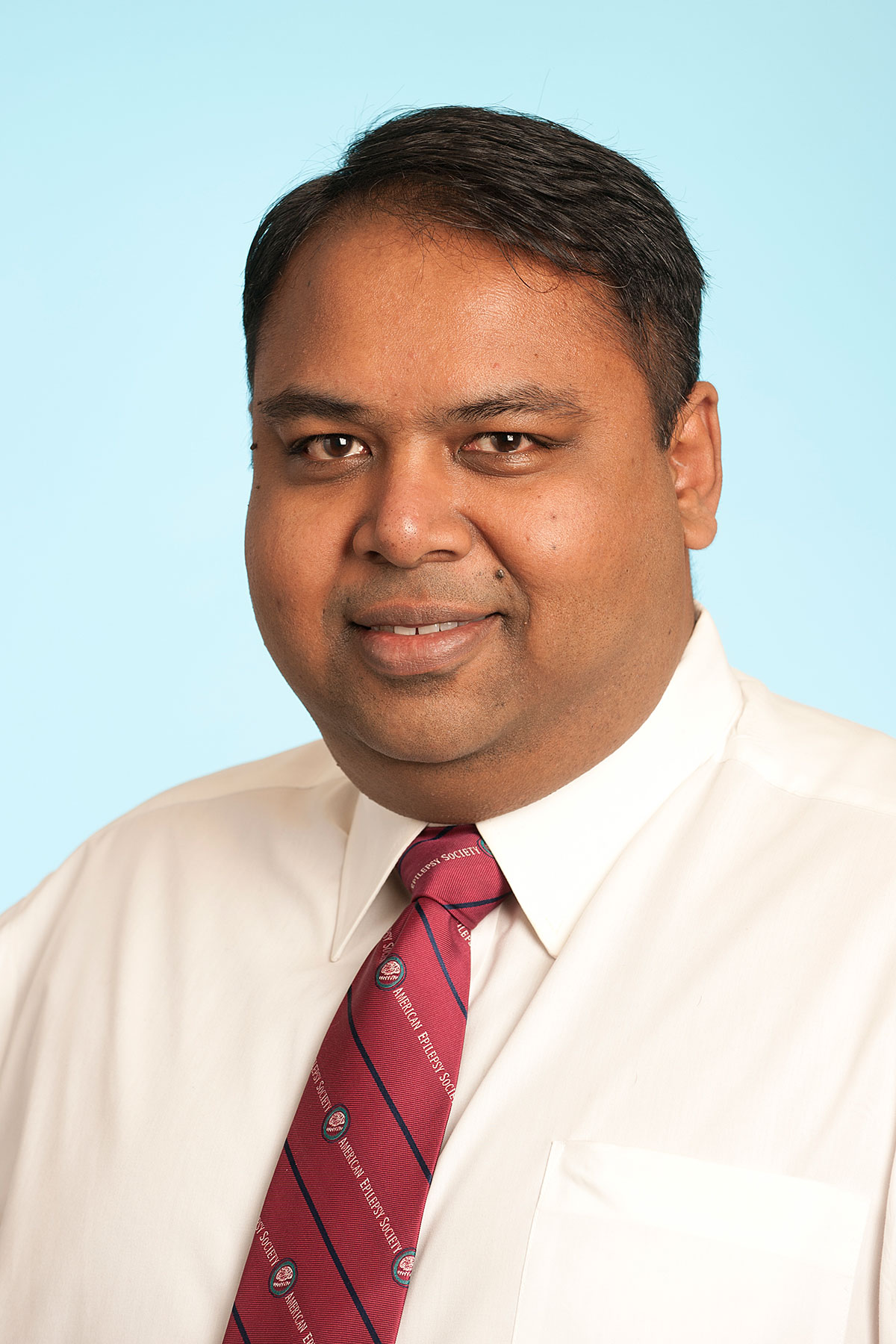 |
Ravindra Arya
Faculty Member/For-Profit Employee
Cincinnati Children'S Hospital Medical Center
Cincinnati, United States |
I am a pediatric epilepsy specialist focused on patients with diagnostic and therapeutic challenges, including drug-resistant epilepsy. Having trained and practiced in both India and the U.S., I bring a unique perspective on healthcare delivery and translational research across diverse resource settings. I am part of the Comprehensive Epilepsy Center at Cincinnati Children’s Hospital and Professor of Neurology, Pediatrics, and Computer Science at the University of Cincinnati.
|
| |
Research Interests:
My lab uses computational analyses of intracranial EEG and neuroimaging to study the organization and development of neural circuits supporting language and memory, and dynamic cognitive deficits in refractory epilepsy. This work also advances validation of safer, more efficient, methods for presurgical language and memory mapping in children.
Past Experience:
Describe your past contributions or participation in computational neuroscience.
I am a successful clinician scientist with sustained grant support and over 135 publications. I am currently the Director of the ACNS Computational Neurophysiology and Neural Engineering SIG. I serve/have served on multiple editorial boards, NIH and other grant review panels, and have led several committees for professional organizations.
Motivation:
Please explain why you want to become an OCNS director.
Modern neurophysiology generates high-dimensional datasets that capture multiple spatiotemporal scales and reflect different aspects of neural activity. These data can be analyzed using state-of-the art computational methods to gain valuable and novel insights into normal as well as abnormal neural function. My objective is to engage with broader computational neuroscience community through OCNS to promote mutual education, collaboration, and responsible best practices, towards this end.
OCNS and CNS participation:
# of CNS meetings attended: 0
Review service for CNS meeting: none
Programme Committee / Local Organizing Committee member: never
Member of OCNS Board of Directors: never
|
 |
Srikanth (Sri) Ramaswamy
Faculty Member/For-Profit Employee
Newcastle University
Ne24Hh, United Kingdom |
I am Associate Professor of NeuroAI at Newcastle University, where I lead the Neural Circuits Laboratory. I build biologically grounded models of neuromodulatory systems and translate their principles into machine learning. I served OCNS as Workshops Chair from 2023 to 2025. I chair the IBRO Early Career Committee, co-chair the COSYNE Mentorship and Networking Committee, and sit on the Board of the ALBA Network. I write and speak regularly for general scientific audiences.
|
| |
Research Interests:
Neuromodulation as a control architecture: how acetylcholine, noradrenaline, dopamine and neuropeptides reconfigure cortical circuits moment to moment. Data-driven multiscale modelling of neocortical microcircuitry, validated against physiology. Translating these principles into artificial systems for continual learning and energy-efficient AI.
Past Experience:
Describe your past contributions or participation in computational neuroscience.
OCNS Workshops Chair, 2023–2025, selecting workshops from open competition. Programme committees for the BNA 2027 Festival and IBRO Congress 2026. Founder and lead organiser of the NM² conference, (2017-2022). Editorial Board Fellow, The Journal of Physiology; thrice Lead Topic Editor at Frontiers. Author of SfN's Neuronline primer on NeuroAI.
Motivation:
Please explain why you want to become an OCNS director.
OCNS serves a widely distributed community, and many members are the only computational neuroscientist in their department. The newsletter is how they learn what the society is doing and who is in it. Having served as Workshops Chair, I know the Board's work from inside; as a Neuronline author and a contributor to the general press, I know how to make technical work readable. I would use it to profile early-career members and spotlight member research, not only to report decisions.
OCNS and CNS participation:
# of CNS meetings attended: more than 5
Review service for CNS meeting: more than 5
Programme Committee / Local Organizing Committee member: past
Member of OCNS Board of Directors: past
|
|
